Before the House Lights: The Backstage Check That Sets a New Stage Right

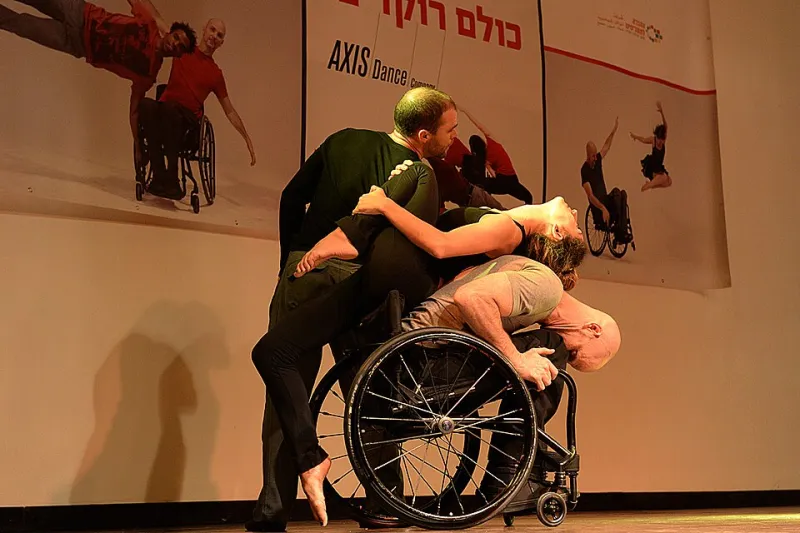
Photo: TAPAS KUMAR HALDER, CC BY-SA 4.0, via Wikimedia Commons
The ten minutes nobody claps for
There is a point in the day when the warm-up is done, the costumes are hanging, and the front-of-house team is still setting out programmes. The stage is empty. Then a dancer walks on in trackies and a hoodie, not to rehearse a phrase, but to check the room.
At Joss Arnott Dance, and across touring companies in the UK, this short pass is not a full tech rehearsal. It is a personal check: a ten-minute conversation between a familiar piece of choreography and an unfamiliar stage. The audience never sees it. They feel it when the show begins.
First, the floor tells you what kind of night it will be
A stage floor is never just a surface. It has a temperature, a texture and a memory of whoever danced on it last. Dancers check whether the marley is taped securely, whether the seams sit where they should, and whether the rake is gentle or steep enough to change how a turn travels.
Bare feet and socks behave differently on the same floor. A surface that is too slippery can turn a relaxed slide into a negotiation. One that grips too hard can make a jump land heavier than it did in the studio. So the check includes a few turns, a slide, a low floorwork moment, maybe a run into a stop. Nobody is trying to perfect the phrase. They are finding out how much grip they have and how much they need to trust it.
In older UK venues, this matters even more. A converted hall, a black-box studio and a mid-scale receiving house can each have a floor with a personality of its own. The choreography stays the same. The approach to it shifts.
Sightlines: who can see what, and who cannot
Next comes the walk to the back of the stalls. If the balcony is open, someone will climb up there too. Dancers check the upstage corners, the downstage edges, and the moments where a gesture happens low to the floor. A hand that reads clearly in a studio mirror can disappear in a raked house.
This is not about changing the work for the sake of it. It is about intention. If the back row loses the fingers, the arm may need to travel a little higher. If a floorwork section is hidden by a seat rake, the performers need to know that some of the detail will be felt through the music and the rhythm rather than seen. The check makes those choices conscious.
Wings, crossings and the geography of a quick exit
Wing space is another quiet obsession. In some venues there is room to breathe. In others, two dancers passing in the dark is a logistical puzzle. The ten-minute check maps the route: where to enter, where to wait, where a prop lives, where a quick change has to happen without knocking over a stand.
A crossover that feels generous in one theatre can become a squeeze in another. Dancers walk it, mark it, and agree on a plan. The choreography may be set, but the route to it is venue-specific. That is why the check is collaborative. Stage management, lighting and crew are all part of the same conversation, even if most of it happens in shorthand.
Sound: hearing yourself think
Then there is sound. Dancers ask for the music at show level, not rehearsal level. They check how loud it feels in the wings, whether the monitor is clear, and whether they can hear their own footfalls. A track that sounds warm in an empty room can feel enormous once the audience is in.
If the intro is louder than expected, counts can feel different. If the bass travels through the floor, a quiet moment may need more breath behind it. The check is not about turning the volume down. It is about knowing what the body will be working with.
The small adjustments that keep it alive
By the end of the ten minutes, very little has changed on paper. A entrance is shifted half a metre. A turn starts from a slightly wider base. A note is made about the downstage corner. A dancer decides to wear rosin. The stage manager confirms a cue. The room stops being strange.
That is the point. A new stage can make a well-known show feel like someone else’s. The check gives the company a shared map: here is the floor, here is the light, here is the sound, here is the space. The performance can then do what it is supposed to do, which is not to survive the venue but to belong in it.
When the doors open, the audience sees a finished stage. The dancers know it was finished ten minutes earlier, in ordinary clothes, with one last look at the wings.