Whose Move Is It Anyway? What Really Happens When Dancers Help Make the Dance
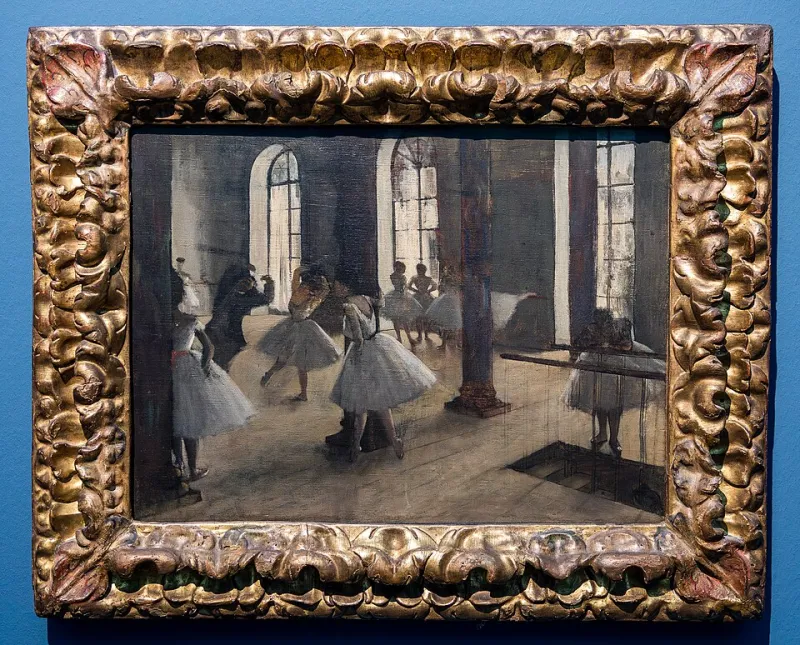
Photo: Raimond Spekking, CC BY-SA 4.0, via Wikimedia Commons
Walk into a devising rehearsal and the first thing you notice is not the movement. It is the talking. Ten minutes of it, often, before anyone stands up: a choreographer describing a task, a dancer asking what the task is really after, someone else offering a version of it that sounds better.
To anyone raised on the image of the solitary genius in a studio with a notebook, this can look like dithering. It is usually the opposite. It is the work.
The Lone Genius Is a Convenience
Contemporary dance in the UK has spent the past few decades quietly moving away from the model where a choreographer arrives with a finished sequence and the cast learns it. That model has not vanished, and there are plenty of companies where it still produces excellent work. But the devising room is now a normal part of the landscape, from mid-scale touring companies to the graduate shows emerging from places like The Place and Northern School of Contemporary Dance.
Co-creation is not a moral position. It is a method, and like any method it comes with trade-offs.
What Co-Creation Actually Looks Like
It rarely means the whole cast sitting in a circle deciding collectively for six weeks. Most working models sit somewhere on a spectrum, and most of them look like this:
- The choreographer sets a task with tight constraints (three seconds of material, no arms, backwards only, repeat it nine times until something changes).
- Dancers generate material inside those constraints, alone or in pairs.
- The room shows what has emerged.
- The choreographer selects, edits, re-sequences, and often asks for the same thing to be made again but differently.
The constraint is doing the aesthetic work. A task that is too open produces material that looks like everything else the performer already does; a task that is too narrow produces nothing but the task. Getting that calibration right is the real skill, and it is one audiences never see.
The Choreographer's Job Changes. It Does Not Disappear.
The persistent worry about collaborative devising is that the work ends up with no authorial spine, that it drifts into a pleasant democracy of eight good ideas and no point of view. Sometimes that does happen.
But the choreographers who do it well tend to describe their role as shifting rather than shrinking. Instead of inventing every step, they are curating, framing, cutting and holding the shape of the whole. They are the ones deciding which of the four beautiful things on the table actually belongs in this piece. That is not a lesser job. It is a different one, and arguably harder to teach.
Decision-Making Is Where It Gets Interesting
Every collaborative room has to answer a question nobody enjoys: who breaks a tie?
Company practice varies widely. Some ensembles vote. Some work by consent rather than majority. Some choreographers hand over sections entirely and step back. Some run a strict hierarchy and simply gather material inside it, which is honest and often effective, provided everyone knew the arrangement before day one.
The awkward parts are rarely about the movement. They are about credit, about pay, about whose name appears in the programme and about what happens when a work tours for three years and the dancer who originated a role has moved on. These are structural questions dressed up as creative ones, and companies that talk about them early tend to have calmer rehearsal rooms. Those that do not often discover the issue four weeks into a tour.
What Changes On Stage
The most visible effect of genuine co-creation is quality of ownership. Performers moving material they helped generate make decisions faster, recover from mishaps more intelligently and tend to carry a kind of specificity that is very hard to coach into a step you have simply been given.
The less visible effect is in what the work is about. When six or eight people have fed into the material, the finished piece often holds a wider range of physical thinking than a single imagination would have produced. It can also be baggier. Editing is what saves it, and editing is the part that still needs one clear eye.
There is a quieter risk too: a devising room that runs on generosity can become dependent on the specific people in it. Recasting a co-created work is its own craft, and a new dancer stepping into material generated by someone else deserves the time to make it theirs rather than simply mimic it.
So What Should Aspiring Performers Take From This?
Learn to generate. The dancers who thrive in these rooms are not necessarily the most technically polished in the audition. They are the ones who can be handed a strange instruction, produce something specific within two minutes, and then happily throw it away.
Also, learn to ask the boring question. What is this section for? Who is deciding? If this changes, what does it cost? A rehearsal room that can survive those questions is usually a room worth spending a season in.
Collaborative devising is not more virtuous than a choreographer arriving with the steps. It is just a different way of getting to a piece, and it works best when everyone in the room, performer and maker alike, is clear about which way they are doing it.