Arriving at 6.14pm: A Fifteen-Minute Studio Reset for Dancers With Day Jobs
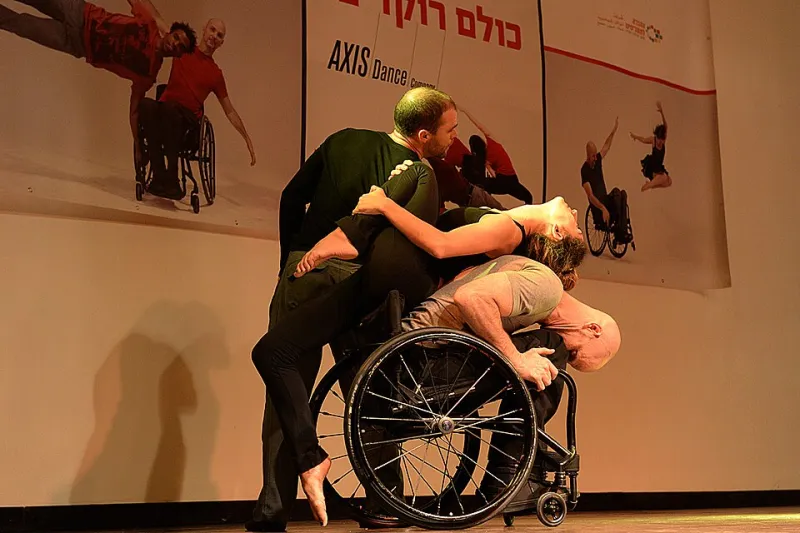
Photo: U.S. Embassy Tel Aviv, CC BY 2.0, via Wikimedia Commons
There is a particular kind of dancer who arrives at the studio at 6.14pm with a tote bag over one shoulder, a water bottle clamped in their teeth and a body that has spent eight hours in a chair. They have eleven minutes before the register is taken. They are not going to do a thirty-five-minute floor barre with three therabands. They are going to do something else, and it is going to work.
Why Fifteen Minutes Is Not a Compromise
Adult dancers coming to evening class straight from work are routinely sold the same warm-up as full-time vocational students: long, luxurious, built for a body that has been in a studio since nine in the morning. It is a lovely thing. It is also, for most people, a fantasy.
A short warm-up is not a lesser warm-up. It is a different job. The aim is not to prepare for a two-hour rehearsal; it is to take a body compressed by a desk, a Northern line seat and a laptop bag and get it to a state where it can move without a complaint. Efficient beats exhaustive when the clock is against you.
And here is the bit worth pinning to the studio noticeboard: fifteen focused minutes, three or four times a week, will do more for your dancing than one heroic ninety-minute session each Saturday followed by nothing at all. Consistency is the whole game.
Setting Up
Kit you actually need: a wall, a floor, a rolled-up jumper. That is the list. Shoe-horn the bag into the corner, take your socks off, put your phone on silent. The mental reset is part of the warm-up. You are stopping being the person who was on a video call twenty minutes ago and becoming the person about to move.
Find a spot where you can see a bit of floor and are not going to get clipped by someone's grande jeté in the corner. Then start.
Minutes 1 to 3: Breath, Before Anything Else
Stand with your back near a wall if there is one, feet hip-width. Hands on the lower ribs. Breathe in through the nose for four, out through the mouth for six. Six rounds. Then, still breathing, add a small side-bend to the right on the exhale, coming back through centre to the left, three times each side.
Why begin here? Because a day at a desk teaches shallow, high breathing, and shallow breathing keeps the ribcage stiff and the neck busy. You are not really warming up muscle yet. You are reminding the system it has a diaphragm, and giving the nervous system a signal that the day job is over.
Minutes 4 to 8: Spine, Segment by Segment
Roll down to the floor, slowly, one vertebra at a time, letting the head hang heavy. Four of these. Then take the spine to the floor and work through a seated twist, threading one arm through and pausing where it feels stubborn rather than where it looks impressive.
Finish with a slow cat-cow on all fours, and then two or three gentle sphinx press-ups to open the front of the body. Eight hours of sitting curls us forward. The spine work is not about achieving a shape; it is about restoring the option to move in every direction. If something clicks, that is information, not a failure.
Minutes 9 to 12: Feet, Without the Bashing
This is the section most people skip and the one that matters most for contemporary class. Foot articulation is not a matter of forcing an arch; it is about waking up the small muscles that spend all day asleep inside a shoe.
Start seated or standing at the wall:
- Roll each foot slowly over a rolled-up jumper or a tennis ball, twenty seconds per foot.
- Doming: pull the ball of the foot towards the heel without curling the toes, eight slow reps per foot.
- Toe presses: press the toes down, lift the heels, lower with control. Ten reps.
- Heel raises at the wall, feet parallel, then turned out. Twelve each.
Keep it unhurried. The ankles are doing a lot of quiet work in contemporary class, and a stiff, cold ankle is where a lot of small niggles begin.
Minutes 13 to 15: Something That Feels Like Dancing
This is the bit that makes the whole reset feel worth it. Two or three big arm swings. A low lunge each side. Then a simple step-touch phrase travelling across the floor, four times, letting the arms do whatever they like.
It is not technique. It is a bridge between the warm-up and the class, and it stops the first exercise of the evening coming as a shock to the system.
Why This Version, and Not a Longer One
Because the warm-up you do is better than the warm-up you plan. If your routine needs forty minutes and a foam roller to be complete, you will skip it on the weeks when work runs late, and those are exactly the weeks you need it most.
A fifteen-minute reset is small enough to survive a bad Tuesday. It fits in a changing room with one mirror and eleven other people. It requires nothing you cannot carry.
A Note for Teachers
If you teach adult evening classes, consider building these fifteen minutes into the start of the session rather than leaving it as homework. Plenty of dancers arrive genuinely unable to warm up in the corridor, and a led reset gives everyone the same starting point. It also quietly signals that the class is for the bodies in the room, not for an imagined eighteen-year-old.
Arrive at 6.14pm. Put the bag down. Take your socks off. Start breathing. That is the whole trick.