Cutting Room Floorwork: What Goes When a New Dance Piece Sheds Its Favourite Bits
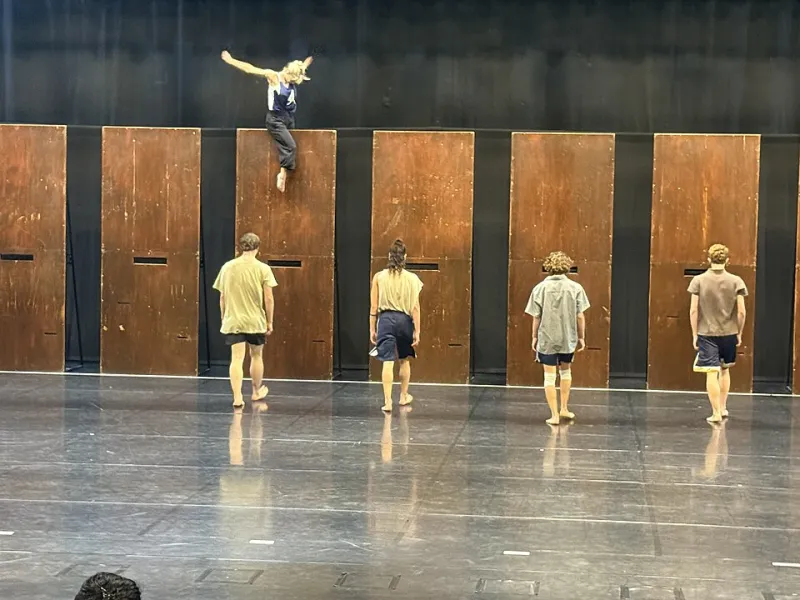
Photo: שלמה רודד, CC BY 2.5, via Wikimedia Commons
There is a phrase in every new dance work that everybody loves. It usually turns up in week two, in the corner of a studio with bad light, and it makes the room go quiet in a good way. The dancers ask to run it again. Someone films it on a phone. By the following Thursday it is gone.
Editing a dance piece is not a tidy process of trimming fat from a well-marbled cut. It is closer to surgery on something still breathing. And the hardest part is rarely technical — it's emotional. Choreographers get attached. Dancers get attached, sometimes more fiercely, because they are the ones who have to physically inhabit the material eight times a week on tour.
So how does a company actually decide what stays?
The bit everyone loves is not the bit the piece needs
A room full of people enjoying something is real evidence, but it is not the only evidence. The question we keep coming back to is simpler and more brutal: what is this section doing that nothing else in the work is doing?
If the answer is 'it's beautiful', that's not enough on its own. Plenty of things are beautiful. If the answer is 'it buys the dancers ninety seconds of recovery before the final section', that is a genuine function, and it might survive even if it never becomes anyone's favourite. Function beats fondness more often than dancers expect.
The other trap is the phrase that exists because the movement before it needed a landing. Cuts get easier once you accept that some material is scaffolding. You needed it to build the thing. You don't need to leave it in the building.
Pacing doesn't show up in the studio, it shows up at 8.20pm
Rehearsal-room time is strange time. Twenty minutes of material can feel like four when you're inside it and like twenty-five when you're watching it in a cold room. Neither of those is what an audience experiences at a mid-scale venue on a wet Tuesday in November, having driven forty minutes and paid for a babysitter.
This is why we try to get rough cuts in front of people early — not a full audience, just a handful of people who haven't watched the work grow and who won't be diplomatic. Their attention is the closest thing you have to the real thing. Where do they shift? Where do their eyes drop? Which section makes them sit forward, and which one makes them check the time without meaning to?
Pacing is also physical, not just structural. A cut that removes ninety seconds can change how a dancer breathes through the next three minutes. Sometimes you cut something and a whole section suddenly becomes performable, because the person dancing it is no longer arriving into it with nothing left.
What a cut actually costs and saves
Editing decisions are artistic, but they are never only artistic. On a UK tour, a minute is a material thing.
- Programme length. A 55-minute first half plays very differently to a 70-minute one when the venue needs the interval bar takings and the last train back to Leeds is at 22.40.
- Get-in and tech time. Fewer sections can mean fewer lighting states, which can mean a shorter tech on a day when the crew has three hours between the van doors opening and the doors opening.
- Rehearsal days. Every retained section has to be maintained. If you're paying dancers by the day in a funded project, a cut in week three can buy back half a day in week five for the bit that actually needs work.
- Van space. Unglamorous, decisive. Set, costume and touring kit all have to fit, and a section that requires a whole extra set of staging has to be worth its footprint. Sometimes it isn't.
- Casting and cover. A cut can remove a tricky dependency — a lift, a quick change, a moment where one person's absence would collapse the whole thing. That matters when you're on the road and someone's ankle is not what it was on Monday.
None of this should drive the artwork. But pretending these pressures don't exist is how pieces end up overlong and under-rehearsed.
Who actually decides
It is not a vote, and it is not a dictatorship — though it can feel like both from the inside. In practice, the choreographer holds the final call, but the room has real influence, and the best cuts are usually proposed by the people dancing them. A dancer will often say, quietly, at the end of a long day: 'I don't think we need this bit.' That sentence carries weight because it costs something to say.
What helps is separating the conversation into two questions. First: does the work need this? Second: do we love it? Answer them in that order and the discussion stops being about taste and starts being about structure.
What survives, and what you learn to let go
What survives tends to be material that is doing at least two jobs at once — carrying the rhythm, shifting the spatial logic, revealing something about the person performing it. What gets cut tends to be lovely, well-made and slightly redundant.
The useful discipline is to keep a cut list rather than delete things entirely. Some material comes back weeks later in a different place, doing something completely new. Some of it stays in the notebook forever, which is fine. Not every good idea belongs in this piece, in this hour, on this tour.
And there is a strange relief in the final week when the cuts are done and the work suddenly feels lighter than it has in months. Nobody misses the phrase they fought for. They're too busy dancing the thing that replaced it.