Ears Before Extension: Listening as a Trainable Technique in Contemporary Dance
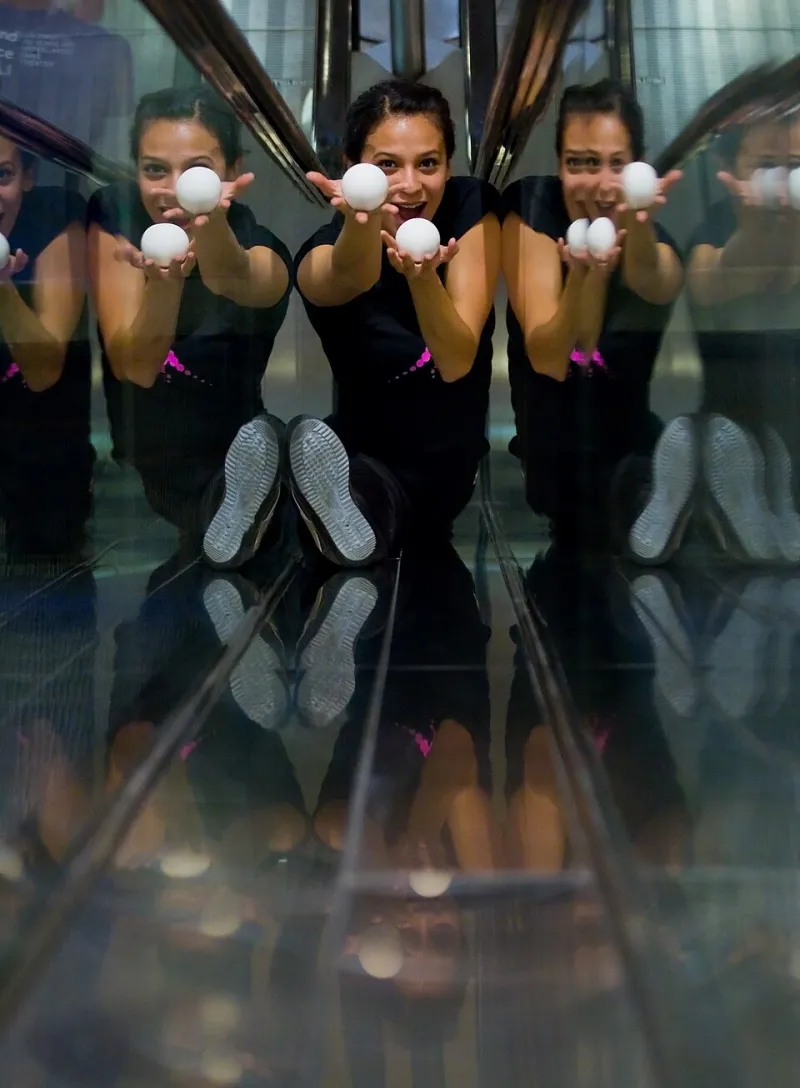
Photo: Maurice from The Hague (Den Haag), the Netherlands (Nederland), CC BY 2.0, via Wikimedia Commons
Contemporary dance class is very good at training what we can see. We lengthen a line, adjust a hip, stack a spine, hold a balance for one more breath. We film phrases and compare shapes. We talk about extension, articulation and suspension. All of that matters. But there is another technique running underneath it, one that is harder to assess and easier to ignore: listening.
I do not mean listening only to music. I mean listening to breath, footfalls, partners, space and silence. I mean the active scanning a dancer does when they are not simply counting themselves through a phrase but hearing the room around them. In my view, that skill is as trainable as balance. It just needs to be taught.
The technique we do not name
Listening is often treated as a personality trait. Some dancers are described as musical, sensitive or intuitive, as if they arrived with better ears. But watch a company in rehearsal and you see listening being built. Dancers learn to hear the difference between a breath that signals preparation and a breath that signals release. They learn to feel a partner’s weight through the floor before a lift. They learn that a footfall can be a metronome, a warning or an invitation.
At Joss Arnott Dance, that kind of attention is part of the working day. In rehearsal, a phrase might be run without music so that the dancers can hear the breath and the floor. A section might be repeated with eyes softened rather than fixed on the mirror. Dancers talk about the sound of a jump landing, the shuffle of a direction change, the tiny silence before a cue. None of that is decoration. It is how the choreography stays alive when the stage changes size, the acoustics shift or a partner needs a different timing.
What listening looks like in the room
Listening is not passive. It is a form of alertness that changes how a dancer moves. If you are listening to a partner, you might arrive a fraction earlier or later. If you are listening to space, you might notice that the back of the stage is dead and the front carries. If you are listening to silence, you might discover that the phrase does not need to be filled.
On tour, this becomes practical rather than poetic. A phrase that feels spacious in a dry studio can feel rushed in a resonant theatre. A breath that is audible in a small studio can disappear under a score in a larger venue. Dancers who only count will keep the same timing regardless. Dancers who listen will adjust without losing the shape of the work. That is technique, not luck.
Why class often skips it
Most intermediate contemporary classes are built around visual learning. We copy from a teacher, check the mirror, repeat a phrase, and try to make the shape match. That is useful, especially when a dancer is building vocabulary. But it can leave listening underdeveloped. If every task is visual, students learn to watch for approval rather than hear for information.
The fix is not to remove the mirror or abandon counts. It is to add small listening tasks that sit alongside the usual work. They do not need to take over the class. They need to be regular enough that students stop thinking of listening as a mysterious gift and start treating it as a skill they can practise.
A workshop prompt: the three-layer listen
Here is a simple score teachers can build into an intermediate contemporary class. It works best after a warm-up, with bare feet or soft shoes, and with enough space for dancers to move without collision. Allow fifteen to twenty minutes.
Set a short phrase — eight to sixteen counts — that the class already knows. Do not add music at first.
Layer one: partners stand a few metres apart. One dancer performs the phrase while the other listens only to breath and footfalls. The listener does not speak or correct. After one run, they swap. Ask the listener to notice one rhythm and one moment of weight.
Layer two: both dancers perform the same phrase at the same time, but they are not trying to mirror each other. Their task is to finish together by listening, not by counting. Eyes can be open and soft. If they drift, they should adjust through breath and footfall rather than a visible correction.
Layer three: add one listening rule. Whenever you hear your partner’s breath, change level. Whenever you hear a footfall, change direction. Keep the phrase recognisable. Run it once with the rule, then once without, and ask what changed.
Finish with a short discussion. What did you hear that you normally miss? When did listening make you early or late? Did it change the quality of the movement? Then run the phrase again with music at low volume, and once more in silence. The point is not to make the phrase perfect. The point is to make attention visible through the body.
The quiet skill that shows up on stage
Listening will not replace extension or alignment. It will not fix a weak balance on its own. But it gives those techniques somewhere to go. A dancer who can hear the room can adapt. A dancer who can hear a partner can trust. A dancer who can hear silence can let a moment land.
If we want performers who are responsive rather than merely accurate, we need to teach them to listen before they extend. Put it in the class plan. Give it a score. Let it be a little awkward at first. The ears, like the legs, get stronger with use.