Eyes Wide, Feet Ready: Why Watching Is Part of the Training
Photo: Maurice from The Hague (Den Haag), the Netherlands (Nederland), CC BY 2.0, via Wikimedia Commons
The bit of class nobody puts on the timetable
Most dance training is organised around doing. You warm up, you learn phrases, you repeat them, you get corrections, you do them again. All of that matters. But there is another skill sitting quietly at the edge of the studio, and it is one that aspiring contemporary dancers tend to pick up by accident rather than by design: watching.
Not scrolling. Not waiting your turn. Not half-following the teacher while you mentally rehearse your entrance. Actual watching — the kind where you notice what a dancer is doing, how they are doing it, what it communicates and what you might say about it afterwards.
I think that deserves a proper place in class. Not as a warm-up game or a filler while someone finds the right track. As training.
Half the room dances, half the room looks
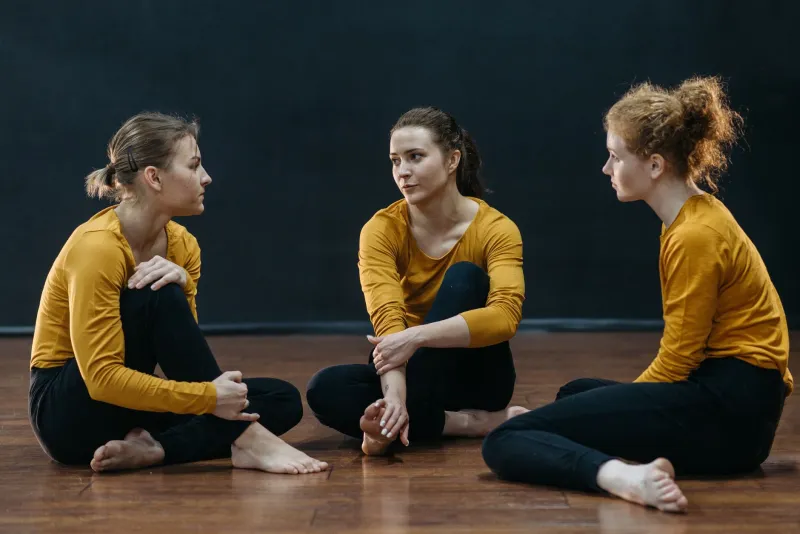
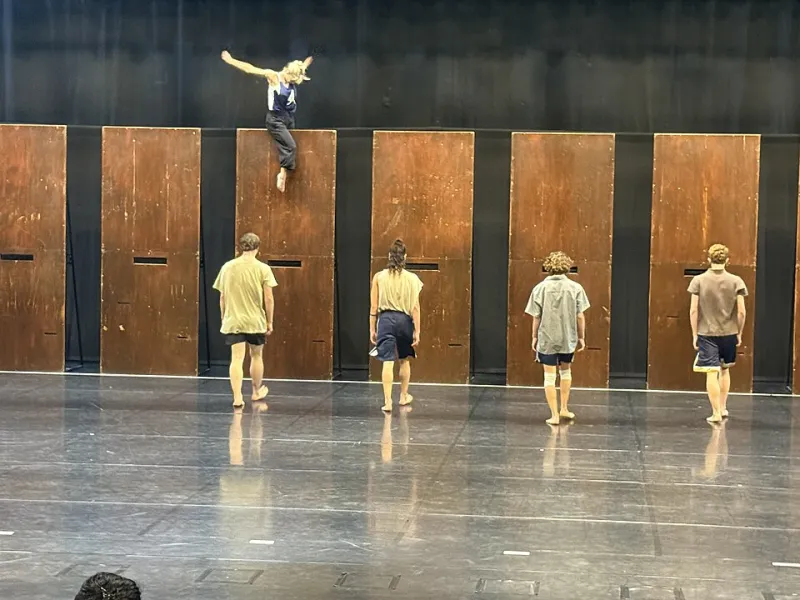
A useful exercise is almost embarrassingly simple. Split the room in two. One group dances a short phrase — something around forty-five seconds, enough to have a beginning, a middle and an end. The other group watches. No phones, no notes at first, no whispered commentary. Just eyes on the moving bodies.
Then the groups swap notes before they swap roles. Not marks out of ten. Not ‘that was good’ or ‘that was a bit messy’. The instruction is to describe what you saw and what it made you notice. What was the dancer’s focus? Where did the movement seem to travel? Did the phrase have a clear change of pace, or did it stay in one gear? Could you tell where the weight was going, or did the transitions blur? Was there a moment when you wanted to keep watching, and a moment when your attention drifted?
When the dancers hear those notes, something useful happens. They are not being told whether they are ‘right’. They are being told what landed from the outside. That is a very different kind of information.
Looking is not the same as judging
Contemporary dance can be a bit snooty about audience reaction, and a bit nervous about it too. We want people to watch, but we can get defensive when they describe what they saw in plain language. In class, it helps to separate looking from judging.
Judging says: that was strong, that was weak, I liked it, I didn’t. Looking says: I saw a low centre of gravity, a repeated reach to the left, a pause that felt longer than the music suggested. Judging closes the conversation. Looking opens it.
For performers, this is gold. If you know how your movement reads from three metres away, you can make better choices on stage. You can tell whether a tiny hand gesture is actually visible in a larger space. You can sense when a section needs more breath, more stillness or more clarity. You stop relying on how it feels in your body and start understanding how it arrives in someone else’s.
The audience is already in the room
Here is the slightly awkward truth: every class has an audience. Other dancers, the teacher, the pianist, the person waiting for the studio to clear. We just don’t usually treat them as part of the work.
When you practise watching, you also practise being watched. That sounds obvious, but it is not the same as being assessed. Being watched in a low-stakes class exercise can take the sting out of performance later. You get used to the idea that people are looking, that attention is not a threat, and that feedback can be specific without being cruel.
It also makes you a better classmate. Instead of zoning out when it is not your turn, you can use those minutes to study how someone else solves a movement problem. Maybe they find a route through the phrase that you would never have tried. Maybe they make a transition look effortless. Maybe they lose the timing and recover it. All of that is information you can borrow, adapt and test in your own body.
A simple habit to take into the week
You do not need a special workshop to start. In your next class, pick one dancer during a run-through and watch them the way you would watch a performance. Afterwards, tell them one thing you noticed and one thing you wondered. Keep it precise. Keep it kind. Then swap.
If you are the one being watched, resist the urge to explain. Just listen. You do not have to agree with every note. You are gathering evidence about how your movement travels.
At Joss Arnott Dance, the studio is where performance begins, not where it gets postponed until opening night. That means training the body, yes — but also training the eyes, the attention and the language you use to describe what is happening in front of you. The audience may not be in the room yet, but the skill of meeting them starts long before the house lights go down.