What’s in a Working Title? The Messy, Useful Business of Naming a New Dance Work
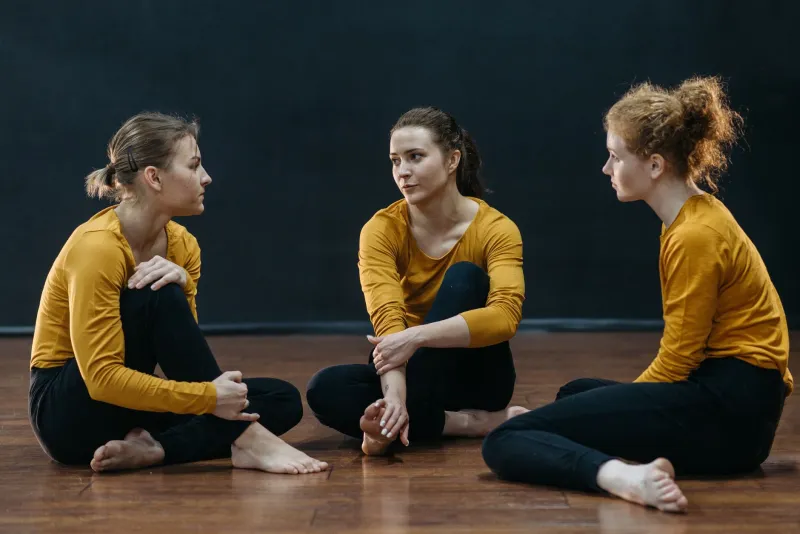
There is a particular kind of silence in a rehearsal studio when someone asks, “So what are we calling it?” It is not quite the silence of concentration. It is the silence of a room full of people who know the work is real, know it has shape, know it has a date in the diary — and still cannot agree on six words for the front of a flyer.
Dance titles are strange things. They have to do a job that the movement itself is already doing, but in a different language. They have to sit on a poster, a ticket page, a funding application and a printed programme without collapsing under the weight of expectation. And more often than not, they arrive late. Not because makers are indecisive, but because a title has to catch up with the piece.
The placeholder is doing real work
In the early days of a new work, the title is usually a practical object. It might be a phrase from a notebook, a colour, a number, a location, a joke that got out of hand. It exists so the rehearsal schedule has a heading and the lighting designer has something to write at the top of their notes. It is not yet a public statement. It is a handle.
That handle can be surprisingly useful. A good working title gives the room a shared reference point without over-explaining anything. It can hold a mood, a question or a tension. Dancers can say, “This is the bit that feels most like the title,” and everyone nods, even if nobody can quite say why. In that sense, the working title is less a label than a rehearsal tool. It helps the piece find its own weather.
The trouble starts when the working title becomes too comfortable. A phrase that was useful in week one can start to shrink the work by week four. It might point the audience towards a story that is not really there, or make a piece sound gentler, stranger or more literal than it is. That is usually when the quiet retirement begins.
A title sets the audience’s coat on before they enter
Anyone who has sat in a UK theatre foyer knows that titles do a lot of work before the curtain goes up. They shape the first impression in a season brochure, in a venue’s email newsletter, in a review listing, in the split-second decision someone makes while scrolling on their phone. A title can make a contemporary dance show sound approachable, forbidding, playful, political, abstract or personal. It can promise a night out or a provocation. It can also accidentally suggest a completely different piece.
That is why title conversations so often drift away from the studio and into the marketing meeting. A title has to survive being read aloud by a box office team, shortened for a social post, translated for an international tour, and printed at a size that fits the design. It has to work in a sentence like “Joss Arnott Dance presents…” without sounding like a spreadsheet tab. It has to be sayable. It has to be rememberable. Ideally, it has to make someone curious without making them feel they need a glossary.
But marketing is not the enemy here. The useful question is not “What will sell?” so much as “What does this title invite?” A strong dance title does not explain the work. It opens a door and leaves it slightly ajar. It gives an audience permission to bring their own associations, while still signalling that there is a clear artistic world waiting inside.
Testing names without turning the studio into a focus group
Audience testing can be helpful, but it can also flatten a title into something safe and forgettable. The trick is to test for response, not approval. Read a shortlist aloud to a small group of trusted listeners — dancers, producers, technicians, regular attenders, someone who has never seen contemporary dance in their life. Ask what they expect. Ask what they picture. Ask whether the title feels like a question, a command, a memory or a mood. Do not ask them to pick the winner by show of hands. That way lies blandness.
It is also worth remembering that a title lands differently depending on where it sits. A title that feels perfect in a programme note can feel too neat on a poster. A phrase that sounds intriguing in a newsletter can feel baffling when spoken on the radio. In 2026, with more venues programming short runs and more audiences finding work through clips and captions, the title has to carry its weight across formats. It is not just a name. It is a tiny piece of dramaturgy that travels ahead of the show.
The names that get quietly retired
Some titles are changed for practical reasons: another company has a show with the same name, the phrase does not translate, the design team cannot make it work, or it simply sounds wrong when a venue announces it. Others are changed because the piece itself has moved on. A title that felt right when the work was a duet may feel wrong when it becomes a quintet. A title that once sounded ironic may start to sound sincere. A title that was a placeholder may, quite unexpectedly, become the only thing that fits.
That is the odd truth of naming dance: the final title is rarely the cleverest one. It is the one that has survived contact with the work. It has been said aloud in a studio, written on a schedule, tested on a poster, questioned in a meeting and still feels alive. It may not be the first name. It is almost never the first name. But by the time it reaches the front of the programme, it has earned its place.
For aspiring makers, the lesson is simple enough: do not panic if the title arrives late. Let the working title do its job. Keep a list of phrases, images and half-lines. Say the shortlist out loud. Notice what each name makes people expect. And remember that a title is not a summary of the dance. It is the first step the audience takes towards it.
For audiences, it is a reminder that the name on the ticket is part of the choreography too — a small, deliberate invitation written before the first dancer enters. Sometimes it sticks first time. Usually, it does not. And that is not a failure of the process. It is the process.