The Person With the Pencil: Inside the Rehearsal Director’s Quiet Control Room
There is a moment on every tour when the studio work is done, the get-in is underway and everyone is looking for the person with the clipboard. They are not usually the loudest voice in the room. They are the one checking that the running order still makes sense, that the understudy has walked the tricky section, that the floor is as advertised and that the dancer with the sore ankle knows exactly which bits to mark. Welcome to the rehearsal director’s quiet control room.
At a company like Joss Arnott Dance, that role sits at the join between art and logistics. It is easy to call it admin. It is harder, and more accurate, to call it craft.
The clipboard is a living document
A rehearsal director’s notes are rarely neat. They are a palimpsest of timings, corrections, contact numbers, injury flags, travel plans and tiny observations scribbled in the margin. One page might hold a cue sheet for the second half; another might have a reminder to ask stage management about the wing space at the next venue. The clipboard is not a prop. It is a working memory for a whole company.
That matters because touring dance is a series of small translations. A phrase that felt spacious in a studio can feel rushed on a raked stage. A lift that worked with one set of legs might need rethinking when a cover steps in. The rehearsal director keeps the intention of the work intact while the practical details change around it. They are not there to redesign the choreography. They are there to protect it.
Notes are a conversation, not a verdict
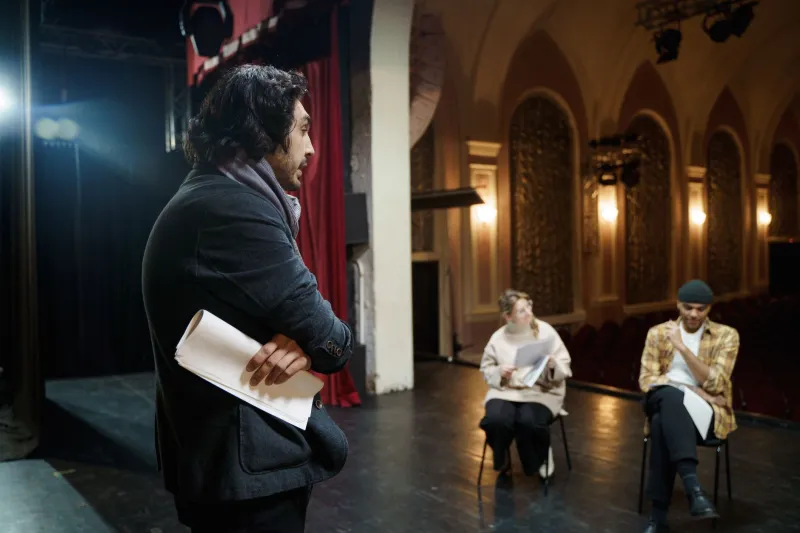
For aspiring performers, the note-giving process can feel mysterious. It should not. Good notes are specific, actionable and tied to something the dancer can do in the next run. They might be about eyeline, breath, timing or the difference between a movement that is merely accurate and one that is alive. They are not a character reference.
The best way to receive a note is to write it down, try it immediately if the room allows, and ask a clarifying question only when you have actually attempted the adjustment. Resist the urge to explain. Resist the urge to nod enthusiastically and forget. A rehearsal director will notice both. They will also notice the dancer who comes back the next day having quietly worked on the note in the corner of the studio. That is the person who tends to get trusted with more.
It helps to remember that notes are usually about the dance, not the dancer. The rehearsal director is holding a picture of the whole piece. You are holding a picture of your part of it. Those two things need to meet.
Cover rehearsals are the insurance policy nobody sees
On a touring show, covers and understudies are not a luxury. They are what keeps the tour on the road when someone is ill, injured or stuck on a delayed train. The rehearsal director runs those cover calls, tracks who knows which track, and makes sure the safety net is actually stitched together rather than just assumed.
This is painstaking work. It means revisiting entrances, exits, partner work and quick changes long after the main company has moved on to polishing. It means knowing when to push a cover into the deep end and when to slow down. It also means communicating clearly with stage management, wardrobe and the wider team so that nobody is guessing on the night. When a cover steps in and the audience notices nothing, that is the job working.
Warm-up is a weather report
The rehearsal director often reads the room before anyone else does. A warm-up is not just a set of exercises; it is a daily scan. Who looks tired? Who is guarding a knee? Who needs a bit of extra time before the fast section? Who is fine but needs to be left alone for ten minutes?
That information shapes the day. It might mean adjusting the schedule, flagging something to the production manager, or simply making sure the studio is warm enough and the floor is clean. Small things, repeated well, are what keep a company standing upright in week four of a tour.
What audiences are really watching
When a complex tour looks effortless, the audience is watching hundreds of small decisions hold together at once. They are watching the result of a rehearsal director who checked the cue sheet, ran the cover call, noticed the tight hamstring, asked the right question at the right time and kept the choreographic intention from drifting.
That is not a backstage extra. It is a creative job. It requires taste, diplomacy, stamina and a good eye for when to speak and when to let the room breathe. The pencil is not a symbol of bureaucracy. It is a tool for keeping the dance alive.
So next time you see a touring company make it look easy, spare a thought for the person with the clipboard. They have probably been in the room since the first studio call, making sure it could.