Press Play With Permission: Music Rights for Dance Makers Who Don’t Have a Legal Team
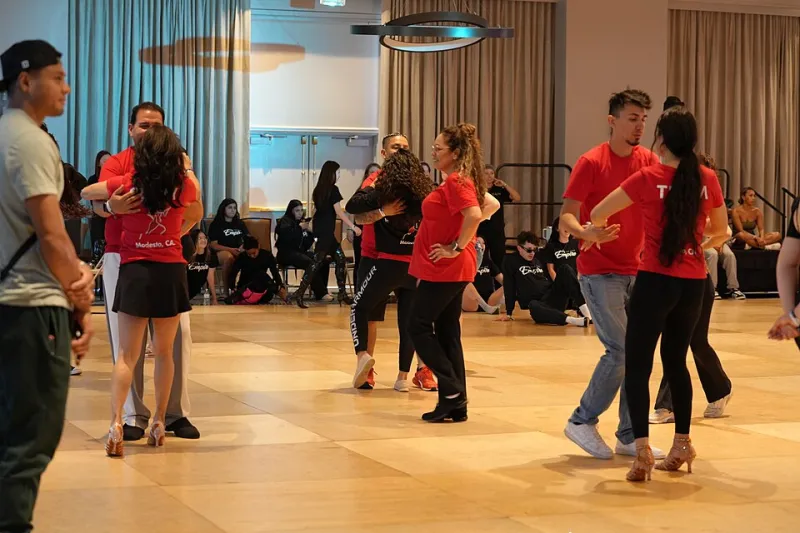
Photo: Rosiestep, CC BY-SA 4.0, via Wikimedia Commons
You have found the track. It fits the phrase, the lights are up, and everyone is ready. Then someone asks the least glamorous question in the studio: are we actually allowed to use this? It is a fair question, and it rarely has a single yes or no answer. Music rights in dance sit across rehearsal rooms, village halls, touring venues, workshop programmes and the endless appetite for clips online. This is a plain-English map of the questions to ask before you press play in 2026. It is not legal advice, but it should help you spot the moments when you need proper advice.
Two rights, one track
A recorded song usually carries at least two separate copyright layers. There is the composition—the music and lyrics, often looked after by a publisher and represented in the UK by PRS for Music for public performance and communication. Then there is the recording itself—the master—which is usually controlled by a label or artist and represented by PPL for public performance of recorded music. Copying music, such as making a new recording or sometimes dubbing it into a film, can bring in mechanical licensing too.
For dance makers, that means there is rarely one person to ask. A streaming subscription is a listening service, not a licence to perform music in public, teach with it, tour with it or sync it to a video. Buying a track on a download store gives you a copy for personal listening, not a passport for stage and screen.
The four places dance music gets used
1. The studio. A private rehearsal with no audience is usually a different scenario from a public class or showing. But the moment you film a rehearsal and post it publicly, you are dealing with copying and communication, not just playing music in a room. Keep the two questions separate: who can hear it live, and who can see it online?
2. Classes and workshops. Public dance classes often count as public performance of recorded music. Many venues hold a PPL PRS TheMusicLicence, but you should not assume it automatically covers your activity, especially if you are hiring a hall for a one-off workshop or running a commercial class. Ask the venue what their licence covers, and get the answer in writing. If you are the organiser, the responsibility may sit with you rather than the caretaker with the keys.
3. Live performance. In a licensed theatre or arts centre, public performance of music is often handled by the venue’s licence. Touring complicates it. A studio theatre, a festival tent, a library, a church or a community centre may have different arrangements. Your contract should say who is responsible for music licensing, and your technical rider should list the tracks and recordings you plan to use. If you work with live musicians performing existing songs, that is another conversation again—usually involving PRS for Music.
4. Online clips. This is where many small companies come unstuck. A fifteen-second Instagram reel, a YouTube trailer, a TikTok clip or a behind-the-scenes video all involve synchronising music with picture. That normally needs permission from both the composition side and the recording side. Platform music libraries can simplify things if you use the sounds they offer within their rules. Credit alone is not a licence. A venue’s music licence covers the venue, not your promotional video.
Common costly assumptions
‘I bought it, so I can use it.’ Not for public performance or online sync. ‘It is on Spotify, so it must be licensed.’ That licence is for listening, not for your show. ‘The venue has a music licence, so our trailer is covered.’ The venue licence is about the premises, not your digital output. ‘It is only a rehearsal video.’ If it is public, it is distribution. ‘We are a small not-for-profit.’ There can be exemptions and special arrangements in some contexts, but they are rarely as broad as people hope. ‘The composer said yes in a message.’ Get the scope in writing: live performance, filming, streaming, promotion, term and territory.
What a licence is actually asking you
A useful licence conversation covers the practical facts. Which track and which recording? Where will it be used—one venue, a tour, a workshop, a website, social media? For how long? What audience size, ticket price and territory? Is it live performance, a recording, a stream or a promotional clip? For commissioned music, the agreement should set out performance, recording, sync, streaming and promotional rights, who owns the master, and whether you can use excerpts online. For library or production music, read the small print: ‘royalty-free’ does not always mean ‘free of all permissions’.
A practical 2026 checklist before pressing play
- Identify both the composition and the recording. Check track credits, label and publisher information.
- Decide the use: private rehearsal, public class, live show, filmed content, stream or trailer.
- Ask the venue about its music licence and whether your activity is covered. Get it in writing.
- For online clips, use a platform’s commercial music library where it fits, or clear sync and master rights properly.
- For regular classes, investigate TheMusicLicence or ask the hall what is already in place. Do not rely on guesswork.
- For tours, put music licensing responsibility in the venue contract and keep a list of tracks and recordings.
- For commissions, sign a clear agreement before the first rehearsal, including online and promotional use.
- Keep a simple music log: track, artist, use, licence, expiry date and contact.
- Put a small music licensing line in the project budget. It is cheaper than a last-minute scramble.
- If the answer is unclear, ask PRS for Music, PPL or a solicitor who knows music and performance.
The admin can feel like a tax on creativity, but it can also sharpen the work. A commissioned composer, a sound designer or a well-chosen library track can give you more control than a commercial hit that comes with a maze of permissions. At Joss Arnott Dance, we care about the moment the music starts in the studio—and that moment is better when everyone knows the groundwork is solid. Press play with permission, ask early, and keep the receipts.