Ground Truth: A Dancer's Five-Minute Guide to Sussing Out Any Floor

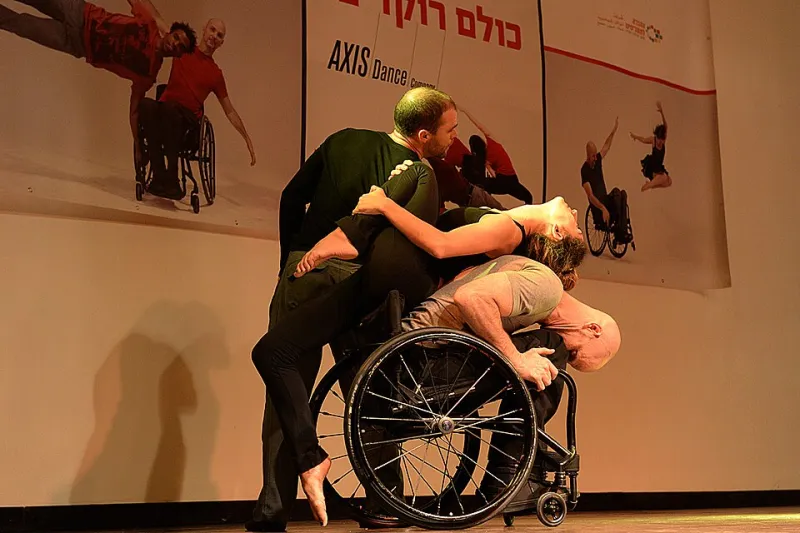
Photo: Sbiswas1982, CC BY-SA 4.0, via Wikimedia Commons
You know the feeling. You walk into a studio you've never taught in, or a theatre you've only seen from the audience, and everyone starts chatting and stretching while you're quietly wondering whether that dark patch near the wing is a shadow or a hole. The floor is the one bit of kit every dancer uses and almost nobody inspects. We tend to treat it like the weather: present, influential, entirely out of our hands.
It doesn't have to be. A few minutes of deliberate looking — call it floor literacy — can save you a tweaked ankle, a embarrassing slide into the wings, or a whole class spent dancing cautiously around a dead spot you could have identified in minute two. It's not fussy. It's part of technique.
Here's a simple five-minute check you can run in any UK studio, church hall, arts centre or receiving house. No equipment required beyond your eyes, hands and a bit of common sense.
Why the floor deserves a proper look
Most of us were taught to warm up the body and ignore the room. But contemporary dance asks a lot of the floor: rolls, slides, weight transfers, unexpected drops. A surface that's slightly too grippy can torque a knee. One that's too slick turns a simple pirouette into a gamble. A dead spot — a joist, a seam, a patch where the suspension has given up — can make a landing feel like hitting a paving slab.
Floor literacy isn't about being precious. It's about arriving informed, so you can adapt your movement rather than discover the problem mid-flight. Dancers who tour quickly learn that every floor has a personality. The good ones introduce themselves before the first plié.
Minute one: walk the perimeter
Start by walking the edge of the space, not the middle. Perimeters tell you the most: where the floor meets the wall, whether the skirting is flush, whether there's a lip or a ramp, whether the surface changes near the wings. Look down as you go.
You're checking for obvious hazards — loose tape, curled edges of vinyl, exposed screws, stray staples from an old set, a suspiciously bouncy patch near the radiator. In older halls, look for uneven boards and gaps that have opened up over summer. In black-box theatres, look for the line where the dance floor meets the stage deck: that transition is where a lot of slips happen, because the textures don't match.
Also clock the exits and the nearest solid wall. If you're teaching, you'll want to know where you can send people for a quiet moment without them tripping over a lighting bar.
Minute two: hands and feet on
Crouch down and put a palm flat on the surface. Feel for grit, stickiness, damp, or a slight tackiness that suggests cleaning residue. Then stand up and do a slow, small slide in each direction — forwards, sideways, a gentle turn. You're not testing your technique here; you're testing the floor's answer.
If you're barefoot, notice how the surface grabs. If you're in socks or shoes, notice how much control you have. A floor that feels fine under a trainer can feel like ice under a jazz shoe, and vice versa. This is also the moment to check for splinters if it's a wooden stage — run the back of your hand lightly across the boards near the edges, where wear is worst.
Minute three: find the dead spots
Dead spots are the quiet menace. They don't look like anything, but they change how a jump lands. Bounce gently on the balls of your feet at several points across the space — corners, centre, upstage, downstage, near the wings. You're listening for a duller sound and feeling for a firmer landing.
Mark the ones you find. A bit of gaffer tape at the edge, or simply a mental note, is enough. If you're directing or teaching, tell the room. There's no glory in letting a colleague discover a dead spot with their ankle.
Minute four: grip, dust and the slip question
Look at the soles of your feet or shoes after a few minutes of moving. Dust, talc, rosin residue and hair all collect on a floor and change its grip. If the surface feels slick, don't assume it's you. Ask whether the floor has been cleaned recently and with what. Some cleaning products leave a film that makes vinyl treacherous.
If you use rosin or resin, use it sparingly and away from the main dancing area — a little goes a long way, and a lot becomes everyone else's problem. Keep a small towel in your bag for mopping sweat and a spare pair of socks for when the floor starts to feel unpredictable.
Minute five: ask the person with the keys
This is the step most dancers skip, and it's often the most useful. Venue staff — stage managers, technician, caretakers, front-of-house — know things about that floor that no amount of bouncing will reveal.
Ask simple questions. Is this a sprung floor or a deck laid over concrete? Has anything been moved or repaired recently? Is there a known dead spot? What's the policy on rosin and tape? Is the floor cleaned between shows? Is there a rake, and if so, how steep? If you're in a converted church hall, ask whether the heating has been on and whether the floor gets damp near the doors.
You don't need a formal risk assessment. You just need a two-minute conversation that turns a strange room into a known quantity.
When to say something
If you find something genuinely unsafe — a lifted edge, a wet patch, a screw sticking up, a hole under the vinyl — say it out loud to whoever is in charge, even if it feels awkward. Floors get fixed when people report them. And if you're teaching, build the check into the start of the class. It takes less time than a failed warm-up and it models good habits for the people watching you.
The floor is not the backdrop to the dance. It's the instrument. Five minutes of attention at the start is the cheapest insurance you'll ever buy — and it makes the dancing that follows feel a lot more like yours.