The Quick Change Is a Dance Move: Costume Craft for Contemporary Stages
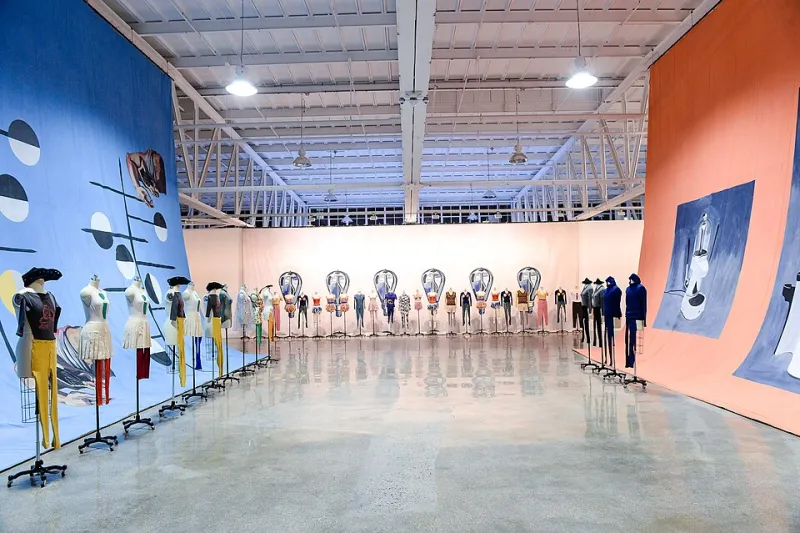
Photo: KaroleArmitage, CC BY-SA 4.0, via Wikimedia Commons
There is a moment in every new production when the choreography is more or less settled and someone says, cheerfully, "Right — what are they wearing?" That sentence sounds like a small admin task. It isn't. On a contemporary stage, a costume can add a beat to a transition, steal a half-second from a jump, or turn a floorwork section into a wrestling match with a hem. Choreography and clothing are in a relationship, and like most relationships, it works best when both parties know what they're signing up for.
So here's a behind-the-wardrobe look at how costumes actually behave on UK stages, and what to raise long before the first fitting.
Start with a movement audit, not a mood board
Designers often get handed a playlist and a colour palette. What they really need is a list of what the body is being asked to do. Before anything is sketched, it's worth sitting down with the choreographer and answering some blunt questions. Is there floorwork? How much? On what surface — marley, lino, a village hall's polished wood? Are there inversions, lifts, partnered rolls, split drops? Does anyone leave the stage at speed and come back thirty seconds later in something else?
That last one matters more than people think. A quick change isn't a costume note; it's a movement phrase that happens to involve a zip. If the change is tight, the costume needs to be built around the change — not the other way round.
Fabric is a technique
A dancer can feel a fabric's opinion within about four seconds of putting it on. Heavy wool looks beautiful in a photograph and turns into a radiator under stage light. Cheap four-way stretch photographs badly and behaves impeccably. Anything with a sheen will catch a low side-light and show every seam.
For touring work, the practical questions tend to be unglamorous. Does it dry overnight in a Travelodge bathroom? Does it hold its shape after the ninth wash in a week? Does it go transparent under a backlight? Does it make a noise — a rustle that lands right in the middle of a quiet solo?
Layering deserves its own conversation. Two light layers can give a designer a silhouette change mid-piece and give the performer a quick-change solution, but only if the underlayer is slick and the overlayer is genuinely easy to shed. Velcro is louder than magnets. Press studs are quieter than both, but slower. There is no perfect answer, only a trade-off you should make on purpose.
The floorwork test is non-negotiable
Contemporary dance spends a lot of time on the floor, and costumes are usually designed upright. This is where a toile — the trial version of the garment — earns its keep.
Book a studio, put the dancer in the toile, and run the actual floorwork phrase. Not a walk-through. The phrase. Watch for three things: friction, drag and exposure. Friction tells you whether a sleeve is going to grab the floor and pull a shoulder out of line. Drag shows up as a hem that needs a hand to free it, which is a hand that should be doing something else. Exposure is the obvious one, but it's rarely solved by adding fabric — usually it's solved by cutting a layer's weight or adding a hidden short.
If the piece involves a lot of rolling, test the costume through ten consecutive rolls, not one. The tenth roll is where you find out the truth.
Rehearse the change, not just the dance
A quick change in the wings is a small piece of choreography, and it deserves a rehearsal slot. Give it a cue, a position, a person and a plan B. Work out who is unzipping, who is holding the spare shoe and where the discarded garment goes — because a costume dropped in the wrong spot becomes a hazard for the next entrance.
It helps to build in redundancy. Two of the same top. A spare pair of tights in the same shade. A second set of laces already threaded. On a touring schedule, something will get lost, torn or covered in hairspray at the wrong moment. The wardrobe run should read like a small logistics document, not a wish list.
Sizing is a design brief, not a compromise
Inclusive sizing is often treated as an extra step at the end. In practice, it's a starting condition. Bodies come in different shapes, and dancers with different bodies do the same choreography with different needs around the shoulder, the waist, the thigh and the bust. A pattern that only exists in one body is a pattern that will need re-making anyway.
Ask early whether the costume can be graded across sizes without losing its line, and whether the fit model is actually representative of the company — including covers. Understudies and covers get costume fittings too, and they should not be an afterthought squeezed in during tech week.
The laundry rota is part of the production
No one puts the laundry rota in the programme, but every touring company runs on one. Costumes that can't be washed, dried and worn again within a day are a touring risk. Hand-wash-only garments are lovely until you're in a regional venue with one small sink and a 10am call.
Build the care notes into the schedule from the start. Who washes what, where it hangs, how it travels and what happens when the weather is doing that British thing of being wet for four days straight. A folding drying rack in the van has saved more performances than most lighting plans.
Five questions to ask before you wear it
Before you step into a costume for the first full run, ask:
- Can I do the biggest movement in the piece without adjusting anything?
- Does anything catch, twist or ride up during floorwork?
- Can I hear myself — and can the audience hear me — when I move?
- If I need to change in under a minute, do I know exactly how, and has anyone timed it?
- Is there a spare, and who has it?
The best stage clothes aren't the ones that photograph most dramatically at the press call. They're the ones that let a dancer forget about them by the second bar of music. When a costume is built as a movement partner rather than a decorative afterthought, the audience never notices it at all — which is, quietly, the whole point.